
Your autumn reading list just became a little more ambitious.
The Booker Prize 2026 shortlist has been announced, narrowing 163 submitted novels down to six books. This year’s selection moves from a post-apocalyptic British coastline to 1980s Jamaica, a rather unusual university experiment and a remote Scottish island.
The winner won’t be announced until November 9, which gives us just enough time to get ahead of the result. But six literary novels can still be a slightly intimidating place to start.
So, which one actually sounds like your kind of book?
1. The End of Everything by M. John Harrison
Read this if: you like dystopian fiction, dark humour and books that don’t fit neatly into one genre.
M. John Harrison takes us to a post-apocalyptic Kent coast, where Phillip Tennant lives with his aunt and scavenges his way through a society that is falling apart. Oh, and there is also a mysterious alien invasion to deal with.
Despite that rather cheerful set-up, The End of Everything isn’t simply straightforward dystopian fiction. The Booker judges describe a novel that moves between thriller, mystery, satire, road novel and realism.
Harrison is 81, and a win would make him the oldest Booker Prize winner in the award’s history.
Pick it when: you want something strange, clever and slightly unsettling.
2. The Disappearers by Marlon James
Read this if: you want an intense literary novel with crime, history and a strong sense of place.
Marlon James returns to Jamaica for The Disappearers, set in Kingston in the late 1980s.
The story centres on the murder of a gay actor rehearsing for a play and the consequences that follow. It confronts homophobia while exploring identity, violence and the secrets people carry with them.
James is hardly new to the Booker world. He won the prize in 2015 with A Brief History of Seven Killings, meaning a victory this year would put him among the very small group of writers to have won twice.
This doesn’t sound like the lightest Sunday-afternoon read on the list, but that probably isn’t what it is trying to be.
Pick it when: you want a big, serious story you can properly disappear into.
3. Black Bag by Luke Kennard
Read this if: you prefer your literary fiction with a healthy dose of weirdness.
The premise alone makes Black Bag difficult to ignore.
A struggling actor agrees to take part in a university psychology experiment. His job? Spend a term attending lectures while zipped inside a large black bag and see how other students respond.
Yes, really.
Inspired by a real psychology experiment from the 1960s, Luke Kennard turns the idea into a campus satire that also explores identity, relationships, confusion and human behaviour.
Of all six books, this may be the easiest one to bring up at dinner purely because explaining the plot requires the sentence, “So basically, there’s a man in a bag.”
Pick it when: you like quirky premises, campus novels and humour mixed with something deeper.
4. May We Feed the King by Rebecca Perry
Read this if: historical fiction appeals to you, but you want something less conventional.
Rebecca Perry is the only debut novelist on this year’s shortlist.
May We Feed the King moves between two timelines. One follows a reluctant monarch in an unnamed medieval court; the other centres on a present-day curator working on displays inside a historic palace.
By moving between the past and the way we present that past today, the novel plays with a fascinating question: who actually gets to decide which version of history becomes the version of history?
Perry has already had quite the debut year. The novel won the Waterstones Debut Fiction Prize before making the Booker shortlist.
Pick it when: you like historical settings, lyrical writing and books that play with perspective.
5. The Things We Never Say by Elizabeth Strout
Read this if: you prefer character-driven books about ordinary lives that turn out to be anything but simple.
Elizabeth Strout’s The Things We Never Say brings us to coastal Massachusetts in the run-up to the 2024 US presidential election.
At its centre is Artie Dam, a teacher whose life appears relatively comfortable from the outside but who is dealing with isolation and despair underneath it.
Against that personal story sits a much wider backdrop of a politically divided America. Rather than turning the book into a straightforward political novel, Strout uses the tension around her characters to examine family, loneliness and the things people struggle to tell each other.
Strout is also one of the more familiar names on this year’s list. The Pulitzer Prize-winning author was previously shortlisted for the Booker with Oh William! in 2022.
Pick it when: complicated families and quietly devastating characters are your weakness.
6. John of John by Douglas Stuart
Read this if: you like emotional family stories, remote settings and complicated relationships.
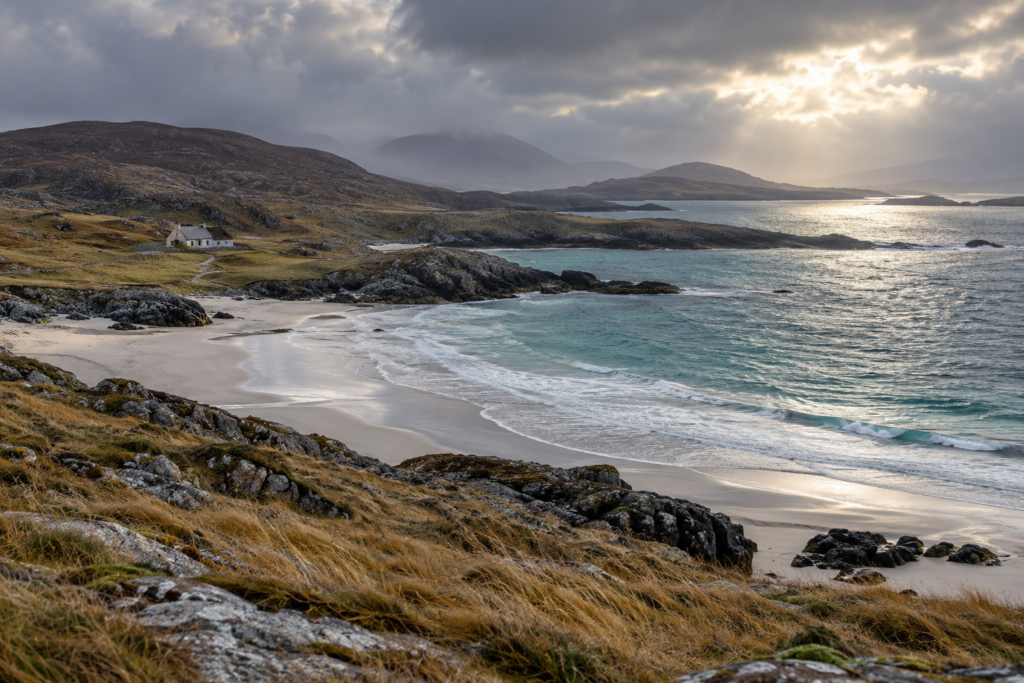
Douglas Stuart takes readers to the Isle of Harris in Scotland in the 1990s in the book John of John.
Young art graduate John-Calum MacLeod reluctantly returns to the remote, religious community where he grew up. Coming home means confronting his relationship with his father as well as old secrets, expectations and shame that never really disappeared.
The isolated Scottish setting plays an important role in a story about masculinity, sexuality, family and belonging.
Stuart previously won the Booker Prize in 2020 for his debut novel Shuggie Bain. Like Marlon James, he therefore has the chance to become one of the rare writers to win the award for a second time.
Pick it when: you want the book most likely to send you straight into an emotionally complicated family situation.
So, where should you start?
The nice thing about the Booker Prize 2026 shortlist is that there really isn’t one obvious type of “Booker book”.
The official winner will be revealed on November 9. Until then, choosing one before the judges do seems like a much more interesting way to make your own prediction.