Most running races tell you exactly where the finish line is. UPFRONT’s Last Man Standing did the opposite.
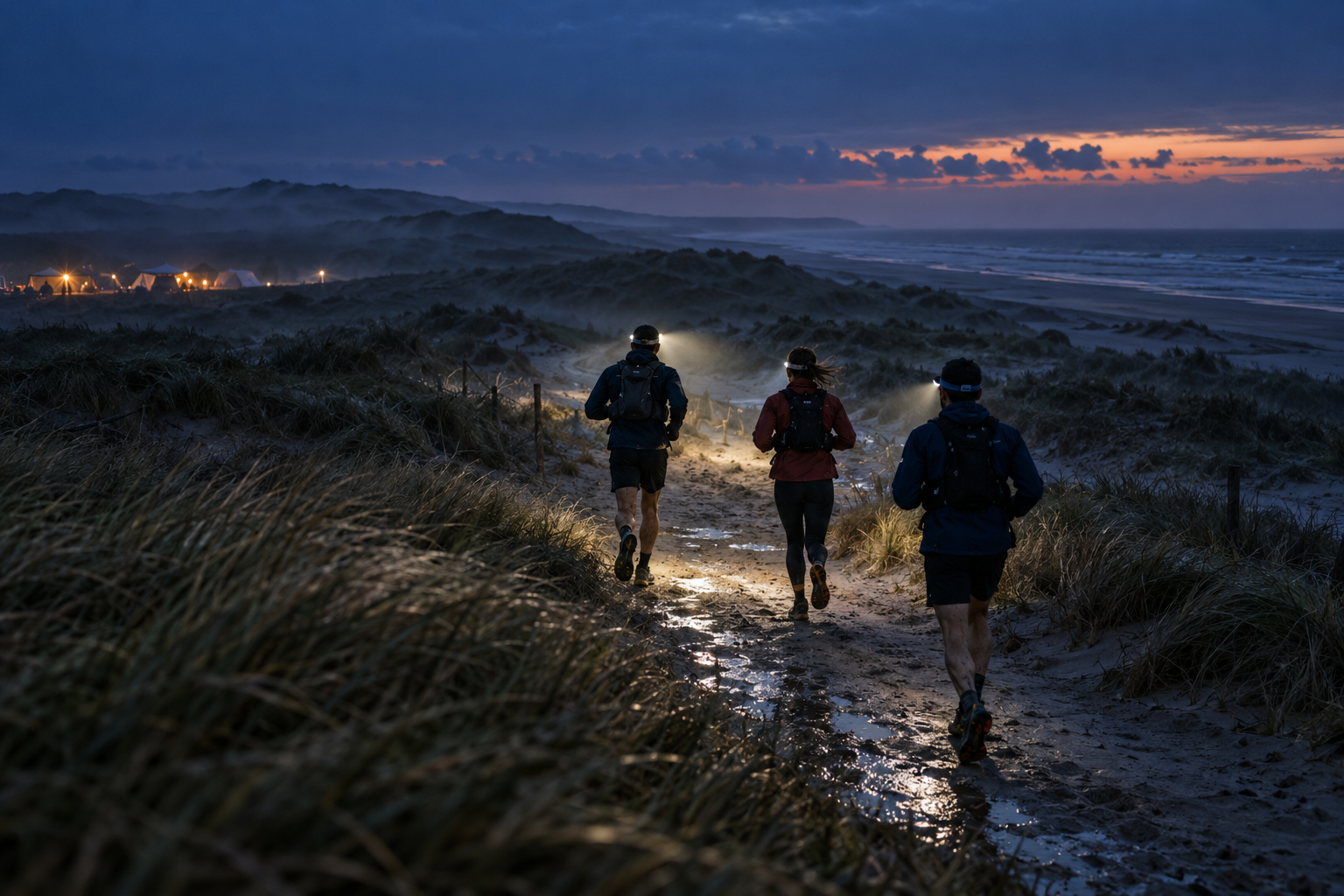
On Friday, October 2, 170 runners gathered on the Dutch island of Terschelling with one deceptively simple assignment: run 6.7 kilometres, finish within an hour and be ready to do exactly the same thing again when the next hour begins.
Then repeat.
By early Monday morning, only one runner was left. Belgian ultrarunner Sam Bracke completed 61 laps — roughly 409 kilometres — to win the first edition of UPFRONT’s Last Man Standing.
For perspective: that is almost ten marathons.
How does Last Man Standing work?
The event follows the backyard ultra format.
Every hour, all remaining runners start the same 6.7-kilometre loop. Finish within the hour and whatever time you have left becomes your break. At the top of the next hour, you need to be back at the start.
Miss the deadline? You’re out. Decide you can’t start another lap? You’re out too.
There is no fixed finish time or total distance. The race continues until every runner but one has stopped. Even then, the final runner still has to complete one more loop to officially win.
That makes pacing surprisingly complicated. Running faster gives you more time to eat, change clothes or close your eyes for a few minutes, but it also costs more energy. Go too slowly and your recovery window becomes tiny.
It is not simply about who can run the fastest. It is about who can keep starting again.
170 runners became two
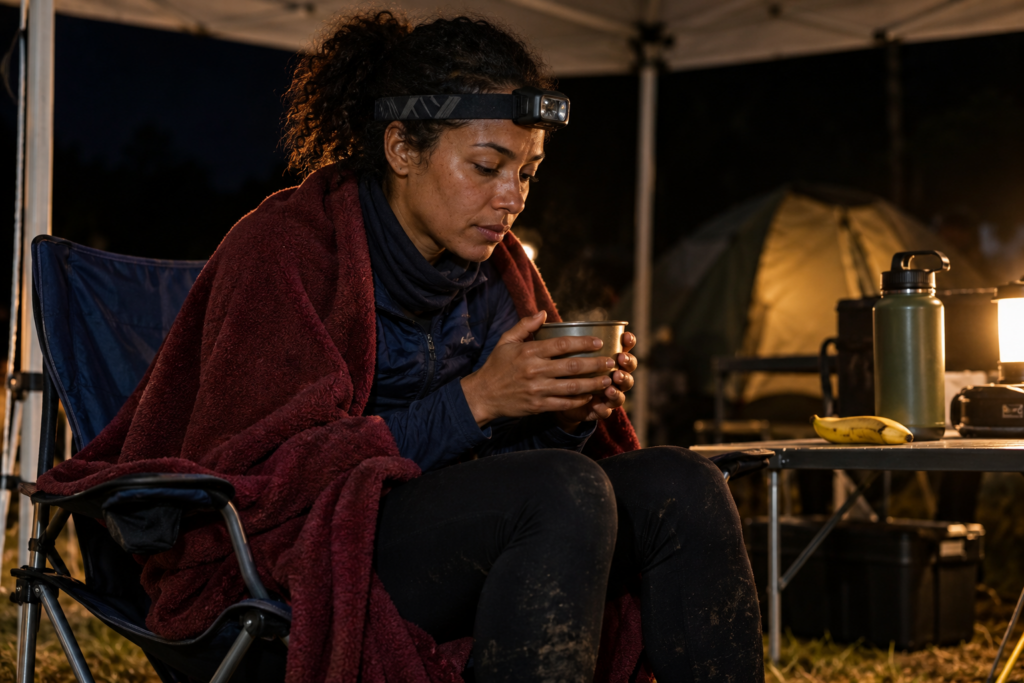
The race began at 5 PM on Friday from a basecamp in West-Terschelling.
As Friday became Saturday and Saturday became Sunday, the field slowly disappeared. Even after the distance passed 300 kilometres, several runners were still going.
Eventually, it came down to two: Belgian runner Sam Bracke and Dutch runner Niels Duteweert.
Duteweert had something extra within reach: the Dutch backyard ultra record. He reached it and continued, eventually completing 60 full laps — around 402 kilometres.
At the start of lap 61, however, he turned back. His race was over.

Sam Bracke still had one more lap to run
Duteweert stopping did not automatically make Bracke the winner.
Bracke had already started lap 61, and under backyard ultra rules he still needed to finish that final loop.
He did.
That brought his total to 61 laps and roughly 409 kilometres after more than two and a half days of running. He also won the event’s €5,000 prize.
Perhaps even harder to imagine than the distance is the lack of sleep. Bracke reportedly managed only around two hours in total, divided into short periods between laps.
Imagine setting an alarm after fifteen minutes of sleep. Now imagine that alarm means: go run another 6.7 kilometres.
Why is such a repetitive race so compelling?
On paper, Last Man Standing sounds almost boring. The runners complete the same loop. They return. They rest. Then they do it again. But that repetition is exactly what creates the tension.
A normal race moves towards a known finish line. Here, nobody knows whether the race will end in an hour or continue for another full day. Every new lap becomes a question: who will still be standing at the start when the countdown reaches zero?
It is also incredibly easy to understand as a viewer. You do not need to know anyone’s pace or race strategy.
They either come back for another lap. Or they don’t.
61 times, he chose to start again
The numbers are hard to process: 61 hours, 61 laps and roughly 409 kilometres.
But perhaps the most remarkable part is simpler than that.
Sixty-one times, Sam Bracke reached another starting line.
After running through two nights, barely sleeping and covering a distance most runners would never consider attempting, he still lined up once more.
You definitely do not need to take that as inspiration to sign up for a 400-kilometre ultramarathon.
But your next 5K suddenly sounds a little more manageable.