You can match with someone before breakfast, exchange voice notes during lunch and know what they did last weekend before you have even met.
Dating has never given us more ways to connect.
And yet, somehow, getting genuinely close to someone can still feel surprisingly difficult.
Hinge has recently given this contradiction a name: the closeness crisis — the growing gap between being digitally connected and actually feeling emotionally close to other people.
And judging by its research into Gen Z dating, the desire for deeper connection certainly isn’t missing. The awkward part is getting there.
We want deeper conversations — but nobody wants to go first
Hinge surveyed around 30,000 of its users for its latest Gen Z dating report and found that 84% of Gen Z daters want new ways to build deeper connections with the people they date.
At the same time, Gen Z daters were 36% more hesitant than millennials to start a deep conversation on a first date.
Therein lies the problem.
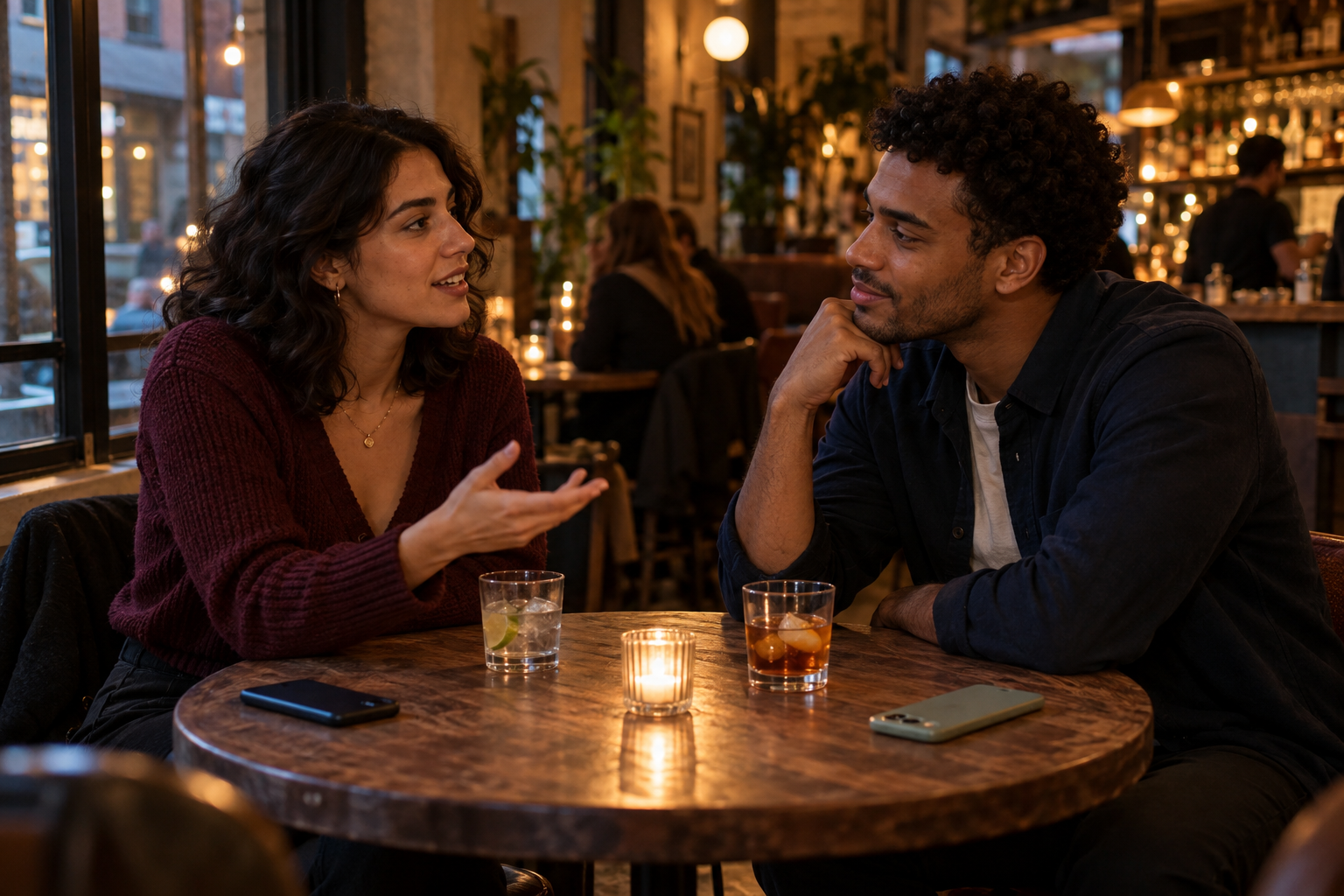
You can sit opposite someone hoping they will ask what you actually care about while they are sitting opposite you thinking exactly the same thing.
Instead, you discuss work. Holidays. Where you live. Maybe your siblings.
All perfectly valid first-date material — until you realise you know someone’s preferred airline but not much about the person sitting in front of you.
Apparently, we’re not asking enough questions either
There is another disconnect.
Most people seem to think they are perfectly decent conversationalists. Their dates are less convinced.
In Hinge’s research, around six in ten Gen Z daters said they felt they asked enough questions on first dates. But only around three in ten felt the person sitting opposite them asked enough.
The questions people valued most were refreshingly normal: following up on something mentioned earlier, asking about someone’s interests and talking about personal values.
No need to arrive with 36 Questions to Fall in Love printed in your handbag.
Simply remembering something your date said ten minutes ago is a surprisingly good start.
And it matters: 85% of respondents said they were more likely to want a second date when the other person asked thoughtful questions.
Then comes the vulnerability hangover
Of course, deeper connection requires saying things that are slightly more revealing than your favourite restaurant.
And that can feel uncomfortable.
Hinge found that 52% of daters had felt ashamed after being emotionally vulnerable. Yet only 19% said they had felt uncomfortable when somebody else was vulnerable with them.
In other words, the embarrassing overshare replaying in your head on the way home may not have landed nearly as badly as you think.
It is an interesting mismatch: we worry that honesty will make us look too eager, too emotional or simply too much, while often being perfectly happy when the person across the table does exactly the same.
Dating apps aren’t necessarily the enemy
It would be easy to turn this into another argument that dating apps have ruined romance.
The reality is less simple.
Apps still introduce people who might never otherwise meet, and new dating features increasingly try to move interactions beyond endless swiping. Tinder, for example, has spent 2026 introducing more social and real-life elements, while Hinge continues to focus its product around conversations and eventual offline dates.
The issue may be less about meeting online and more about what happens afterwards. A match gives you access to someone. It doesn’t create intimacy for you.
Maybe better dating is actually quite low-tech
For all the AI matching, profile optimisation and dating terminology appearing in 2026, the things associated with feeling closer remain wonderfully basic.
Ask the second question. Remember what someone told you. Say the slightly more honest thing. And occasionally put the phone away when there is an actual person sitting opposite you.
Finding someone has become increasingly technological. Getting to know them, thankfully, is still very human.