After years of slick minimalism, impossibly polished outfits and clothes that seem designed to look perfect in a 9:16 frame, fashion appears to be developing a tolerance for mess.
Paris Fashion Week wrapped yesterday, October 6, closing the Spring/Summer 2027 womenswear season. And among the skirts, lingerie dressing and futuristic shoes, something less polished kept appearing.
Frayed hems. Crumpled dresses. Slipping straps. Clothes wrapped rather than perfectly fastened. Fabrics that looked worn, twisted or slightly unfinished.
British Vogue has already given the shift a name: dishevelled dressing.
Fashion, apparently, is coming undone.
This isn’t the messy-girl aesthetic all over again
The important distinction is that these clothes aren’t accidentally untidy.
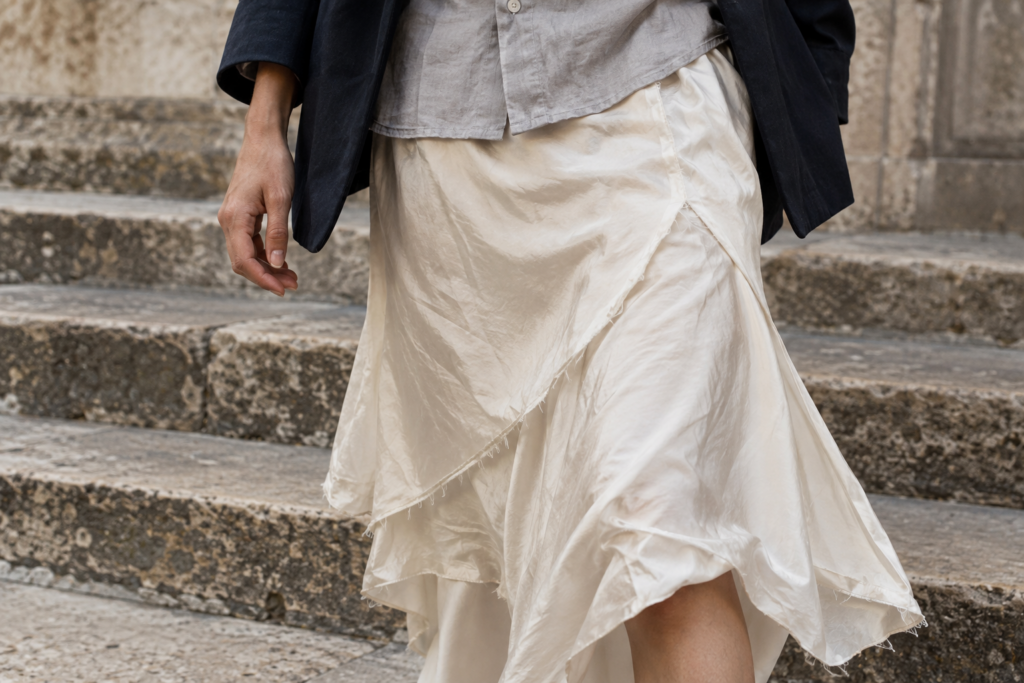
At KNWLS, dresses appeared slashed and reconstructed, while skirts looked as though they had been quickly wrapped from trench coats. Simone Rocha showed delicate gowns with cut straps and skirts with uneven, tumbled hems. At Miu Miu, deliberately crumpled dresses and visible creases became part of the look rather than something to steam out before leaving the house.
Behind all that apparent chaos is, ironically, a lot of design.
These aren’t unfinished clothes. They are carefully made to look less finished.
And that changes the message.
Rather than dressing to prove that everything is perfectly under control, Spring 2027 seems much more interested in personality, movement and imperfection.
Fashion might be getting tired of perfection too
The timing is interesting.
AI-generated images can now produce eerily perfect skin, symmetrical faces, flawless interiors and entire imaginary fashion campaigns in seconds. Social media has spent years rewarding an equally polished version of real life.
Against that background, handmade imperfections suddenly feel valuable.
At Paris Fashion Week, several designers explicitly spoke about humanity, technology and the importance of creative work made by actual people.
At Valentino, Alessandro Michele staged his show inside the Bibliothèque Sainte-Geneviève and invited guests to donate books. Backstage, he spoke about his discomfort with the idea of replacing human work and physical books with AI.
Elsewhere, visibly worked fabrics and imperfect finishes emphasised the hand of the person behind the garment.
That doesn’t mean every wrinkled skirt is an anti-AI protest.
But taken together, the season suggests that fashion is becoming increasingly interested in things technology struggles to replicate perfectly: touch, irregularity, emotion and human error.
Even luxury is becoming a little more real
There was another noticeable shift in Paris.
Despite all the spectacle surrounding Fashion Week, many of the Spring/Summer 2027 collections were surprisingly wearable.
Vogue Business reported that designers were responding to a difficult economic climate by creating clothes that felt more connected to what customers might actually want to wear. Even traditionally conceptual houses including Maison Margiela, Jean Paul Gaultier and Schiaparelli showed signs of moving towards more accessible ready-to-wear.
At Miu Miu, sporty pieces met embellished skirts and tailoring. Dior mixed lighter construction with frayed details. Celine and Chanel were repeatedly highlighted for making desirable clothes without making them unnecessarily complicated.
Maybe imperfection and wearability are connected.
Clothes become considerably easier to live in when looking immaculate isn’t part of the dress code.
So, what does ‘undone’ actually look like off the runway?
Thankfully, you don’t need to start cutting straps off your dresses.
The wearable version is much simpler.
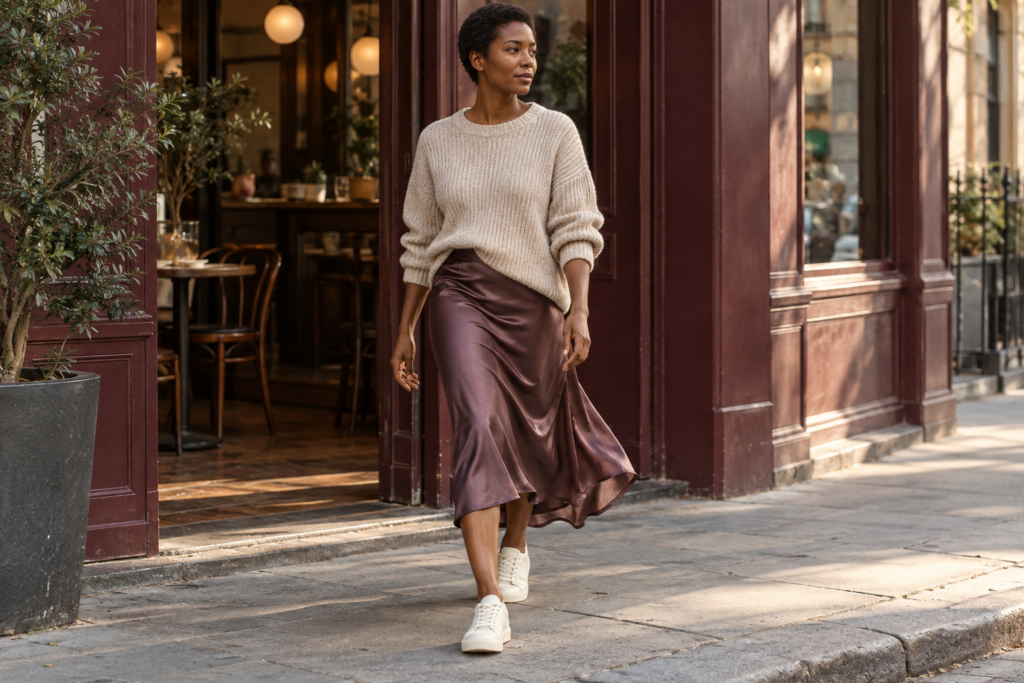
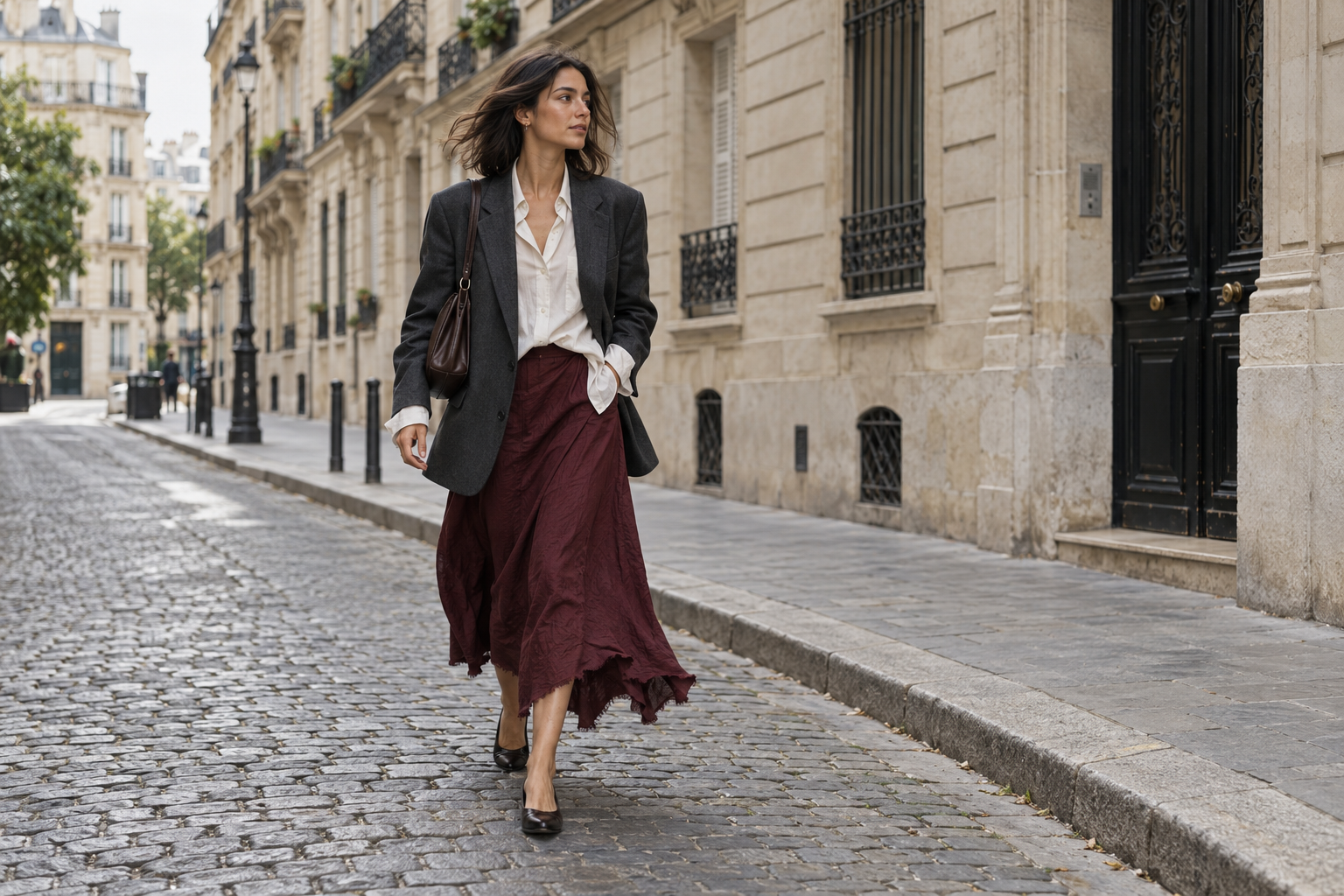
Let a shirt sit slightly untucked. Choose softer tailoring instead of a perfectly structured blazer. Pair something delicate with something obviously casual. Wear the satin skirt with a knit rather than saving it for an occasion. Leave a few creases in.
The point isn’t to look as though you got dressed in the dark.
It’s to stop treating polish as the only route to looking stylish.
Perfect clothes suddenly feel a little old-fashioned
Fashion trends often swing between opposites. Minimalism produces maximalism. Skinny jeans make room for wide legs. Perfect blowouts eventually lead us back to hair with texture.
Perhaps hyper-polished fashion was always going to create the same reaction.
Spring 2027 isn’t telling us to stop caring about clothes.
If anything, the opposite is true.
A loose thread, a crease or an imperfect hem makes you notice the physical garment again — who designed it, how it moves and how it changes when an actual person wears it.
In a world getting increasingly good at generating perfection, looking unmistakably human might be fashion’s more interesting option.