
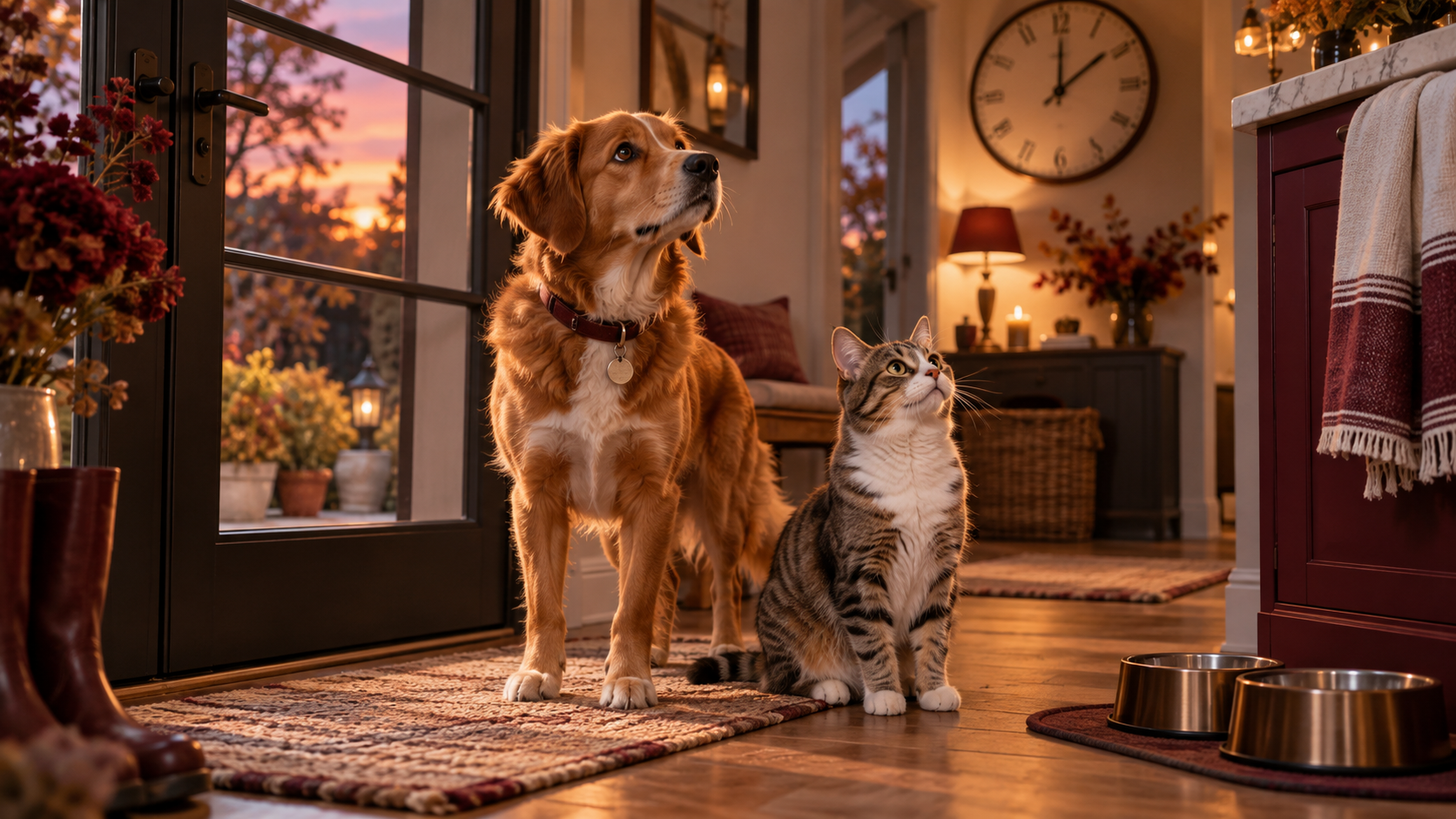
When the clocks go back, most of us enjoy the idea of an extra hour in bed. Your pet, however, may have other plans. Dogs and cats do not read the time, but they are very good at recognising routines — and a sudden one-hour shift can make breakfast, walks and bedtime feel unexpectedly late.
With the autumn clock change approaching, a little preparation can make the transition much easier. Especially for pets that are strongly attached to set mealtimes or daily walks, changing the schedule gradually is often more comfortable than moving everything at once.
Why pets notice the clock change
Animals rely less on the number shown on a clock and more on biological rhythms, daylight and familiar cues. The sound of an alarm, someone getting out of bed, the opening of the food cupboard or the usual evening walk can all become part of a pet’s internal schedule.
That means a one-hour time change can temporarily create a mismatch. A dog may start waiting by the door before you are ready to leave. A cat may begin campaigning for dinner suspiciously early. For many pets this is only a short adjustment, but animals that are older, very routine-focused or used to medication at fixed times may need a little more support.
Shift meals and walks gradually
If your pet is especially sensitive to routine, start adjusting a few days before the clocks change. Move meals, walks and bedtime by around ten to fifteen minutes per day rather than suddenly delaying everything by a full hour.
After the time change, you can continue moving the schedule in small steps until you reach the new routine. There is no need to make this complicated: consistency matters more than perfection.
Keep the familiar cues
When one part of the routine changes, keeping the rest familiar can help. Feed your pet in the same place, follow the same morning sequence and keep walks or playtime recognisable. Predictable cues can make a changed clock time feel less disruptive.
For cats, that might mean keeping an evening play session before dinner. For dogs, it can be as simple as using the same lead-up to a walk: coat on, lead out, then outside.
Remember that evenings get darker too
The autumn clock change is not only about feeding times. It also means darkness arrives earlier, which can change the feel of evening walks. In low light, make sure you can clearly see your dog and that other road users can see you. A reflective lead, collar accessory or light can be useful, particularly on routes near traffic.
Cats that go outdoors may also start spending more active hours outside after dark. If your cat normally comes home around a particular part of the evening, it can help to encourage them indoors earlier while the household adjusts to the shorter days.
Do not overreact to a few impatient mornings
A pet waking early or asking for food before the new breakfast time does not necessarily mean something is wrong. Their routine has simply shifted faster than their expectations. Try not to reward every early wake-up with an immediate meal, or you may accidentally create a brand-new schedule.
Give them a few days to adjust, keep the routine calm and use gradual changes where needed. If your pet becomes unusually distressed, stops eating, shows a major behaviour change or depends on medication that must be given at precise intervals, contact your vet for advice rather than changing the schedule yourself.
A one-hour change can feel bigger to them
For us, changing the clock takes a few seconds. For a pet whose day is built around breakfast, walks, naps and the exact moment someone usually reaches for the treat cupboard, it can feel much more noticeable.
The easiest approach is also the simplest: make small changes, keep familiar routines in place and give your pet a little time to catch up with the clock.